Static Posture Assessment
Screen your standing alignment from the front and side views to identify postural deviations and corrective priorities.
13 checks · ~5 min · No account needed
A static posture assessment is a systematic visual inspection of standing alignment from the front (anterior) and side (lateral) views.
Deviations from neutral alignment can indicate muscle imbalances, joint restrictions, or habitual patterns that increase injury risk and limit performance. This screen helps identify areas for targeted corrective exercise.
Assessment Protocol
1
Wear form-fitting clothing or minimal layers so bony landmarks are visible.
2
Stand naturally with feet hip-width apart, arms relaxed at your sides, looking straight ahead.
3
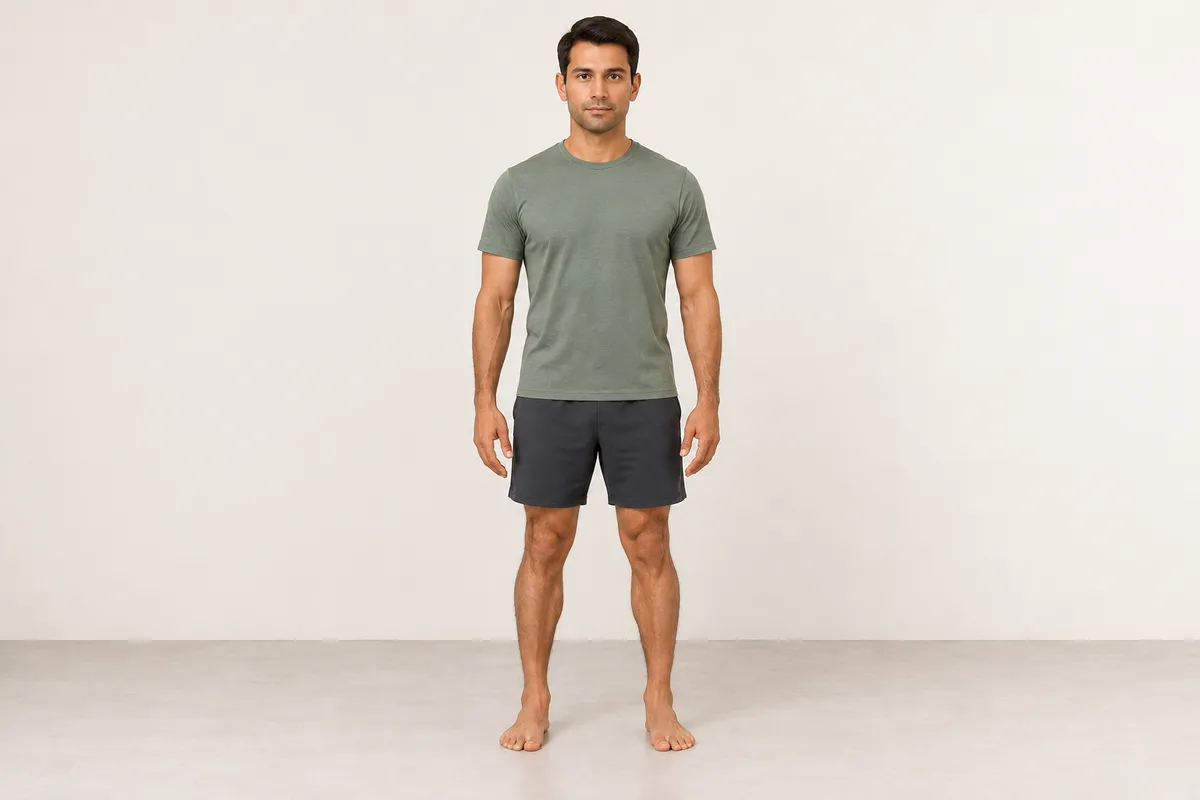
Front view: have a partner or mirror observe from the front. Check the symmetry of ears, shoulders, hands, hips, knees, and feet.
4
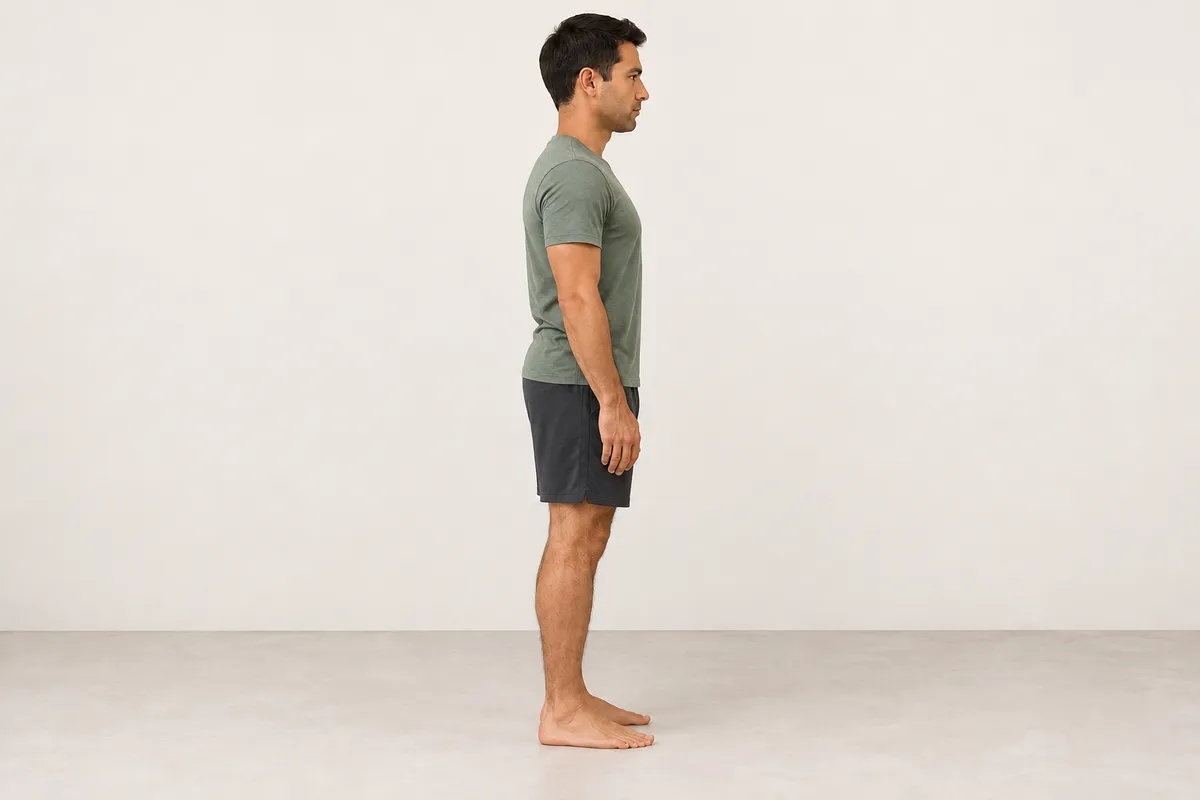
Side view: observe from the side. An ideal plumb line passes through the earlobe, shoulder, hip, knee, and ankle.
5
Mark each deviation you observe below. Do not correct posture during the assessment — observe the natural stance.
6
Repeat 2–3 times for consistency and photograph for your records if possible.
Front (anterior) view
Side (lateral) view
0 of 13 checkpoints flagged
Complete the Checklist
Mark any deviations you observe from the front and side views, then press 'Analyse Posture' to see your alignment summary.
Learn more
Frequently asked questions
A static posture assessment is a visual screen of how a person stands at rest, viewed from the front and the side. It compares the body against ideal alignment landmarks to identify deviations that may reflect muscle imbalances, joint restrictions, or habitual movement patterns.
The number of flagged deviations is converted into an overall rating from Excellent (0 deviations) to Poor (7 or more). Fewer deviations indicate more balanced alignment and lower injury risk. Each flagged region is paired with a corrective exercise suggestion to address the underlying imbalance.
Static posture screening is a useful, quick starting point, but it has limitations. It is observer-dependent and captures a single moment in time rather than how you move. Use it alongside movement screens and, where needed, professional evaluation rather than as a stand-alone diagnosis.